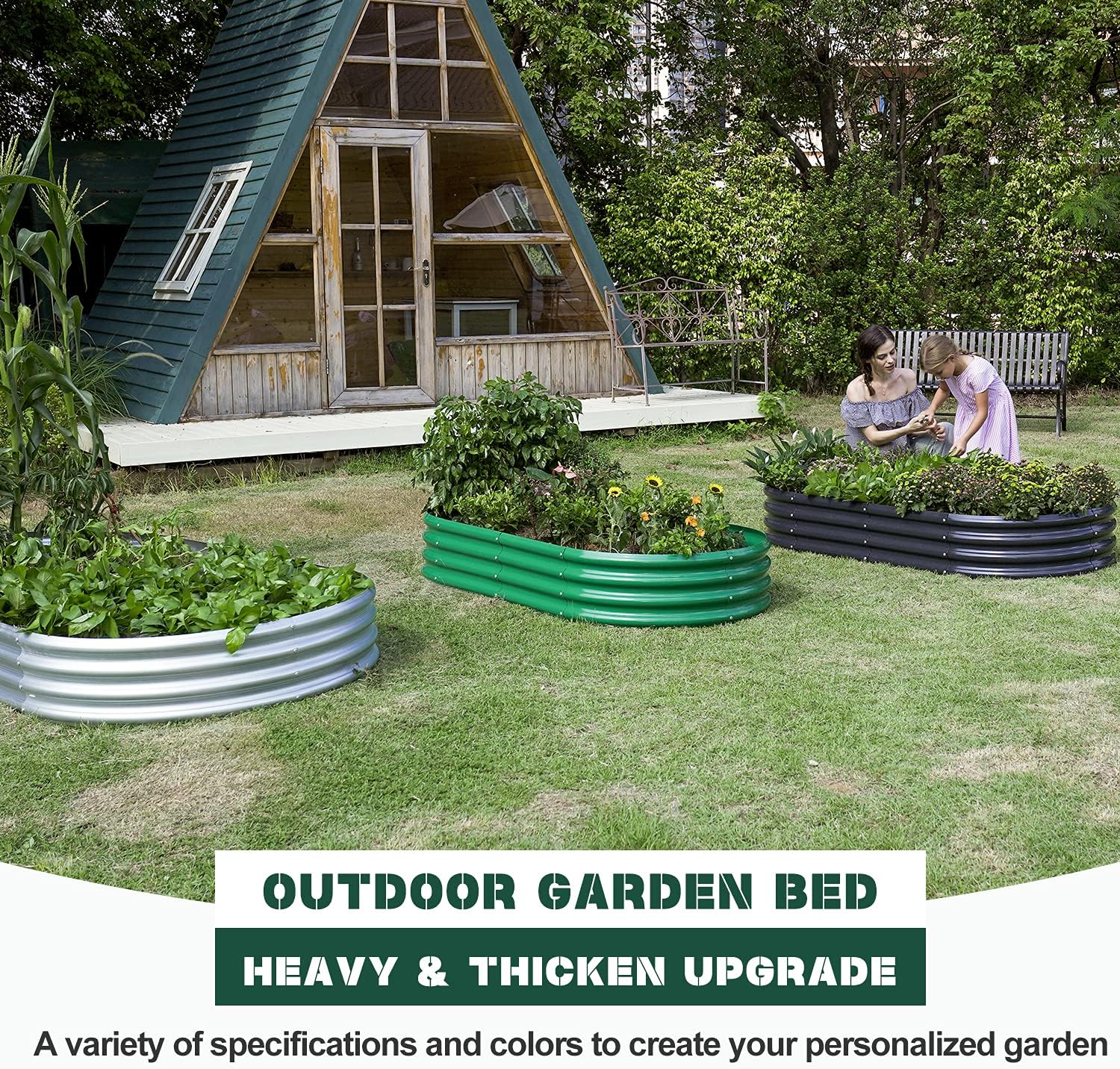
You ordered a 4×8 galvanized raised garden bed — those corrugated or smooth-panel steel containers that look sharp in a backyard and outlast wood by a decade — and now you’re on the supplier’s website trying to figure out how many bags of soil to order before the truck shows up. Sound familiar? Galvanized raised beds (steel beds coated in a zinc layer to prevent rust) have gone from niche to mainstream in the past three years, and the options now range from a $89 kit at a big-box store to $400-plus modular systems that bolt together in any configuration you want. The sizing and soil math looks straightforward until it isn’t: dimensions are listed as exterior measurements, soil settles, corners gap, and a single miscalculation leaves you short on fill or, worse, with a bed that racks and leans under soil pressure. This guide walks through sizing logic, soil volume calculations, and the assembly problems that experienced installers learn the hard way — so you don’t have to.
Sizing Decisions: What the Dimension Listings Actually Mean
The first trap is reading a product listing. When a galvanized bed is described as 4 ft × 8 ft × 17 inches, those are almost always exterior dimensions — the outer edge of the steel panel, not the interior planting space. Depending on wall thickness and corner bracket design, you lose 1–3 inches per side on interior width and length.
For most corrugated galvanized panels in the mid-market range (brands like Vego Garden and Birdies, which are frequently reviewed on Gardenista’s galvanized bed buyer’s coverage), wall thickness runs 0.8–1.2 mm of steel plus the corrugation depth. In practice, a nominal 4×8 bed typically yields an interior of roughly 45 inches × 93 inches, not 48×96. That difference matters less for soil volume than it does for plant spacing math — if you’re running a square-foot gardening grid, build your layout from confirmed interior measurements, not the marketing dimensions.
Height is where sizing decisions get consequential. The standard options you’ll see are:
- 6 inches — decorative border depth, suitable for shallow-rooted annuals and herbs only
- 12 inches — the entry-level “real” bed; works for most vegetables but limits root vegetables like carrots and parsnips
- 17–18 inches — the current sweet spot for most practitioners; accommodates the full range of vegetables without requiring you to amend native soil beneath
- 24–30 inches — ADA-accessible or elevated designs; soil weight becomes a structural and substrate concern at this height
Penn State Extension’s raised bed gardening fact sheet recommends a minimum of 12 inches of quality growing medium for most vegetable crops, and bumps that recommendation to 18 inches for root crops. Oregon State University Extension’s raised bed publication echoes this, noting that deeper beds also buffer temperature swings better — relevant if you’re in a climate with late spring frost risk and want to plant earlier.
Width is a reach problem, not a math problem. The standard 4-foot width exists because the average adult can comfortably reach 24 inches from either side without stepping into the bed. If your bed is accessible from only one side (against a fence or wall), drop to 24–30 inches of width or you’ll be compacting the far half of your soil every time you weed.
Soil Volume Math: The Calculation You Need to Run Before You Order
Cubic footage is the unit your soil supplier works in; bags are what you see at a retailer. Here’s the conversion workflow.
Step 1: Calculate interior volume in cubic feet.
Formula: Length (ft) × Width (ft) × Height (ft) = cubic feet
Use your confirmed interior dimensions, not the nominal size.
Step 2: Apply a 15–20% settlement buffer.
Soil mixes — especially blends with compost or peat moss — compress after watering. Fine Gardening’s coverage of raised bed soil mixes consistently notes that a freshly filled bed will settle 10–20% in the first season. Order to the top of the bed; settle to where you actually want to be.
Step 3: Convert to bags if buying bagged soil.
Most bagged garden soil or raised bed mix runs 1 cubic foot or 2 cubic feet per bag. Check your supplier’s label.
By the Numbers: Common Bed Sizes and Soil Volume
| Nominal Bed Size | Interior Volume (approx.) | + 20% Settlement Buffer |
|---|---|---|
| 4×4×12 in | 10.7 cu ft | 12.8 cu ft |
| 4×8×12 in | 21.3 cu ft | 25.6 cu ft |
| 4×8×17 in | 30.2 cu ft | 36.2 cu ft |
| 4×8×24 in | 42.7 cu ft | 51.2 cu ft |
At mid-2026 pricing, bulk landscape soil (delivered by the yard) runs roughly $45–$85 per cubic yard depending on mix quality and region, while bagged raised bed mix runs $8–$18 per 1.5-cubic-foot bag. A 4×8×17-inch bed filled with bagged mix costs $180–$430 in soil alone at those rates — a cost that surprises first-time buyers who budgeted only for the bed hardware. At scale (multiple beds or larger dimensions), bulk delivery almost always pencils out better. Oregon State University Extension’s raised bed guidelines specifically flag this cost differential and recommend bulk sourcing for anything over two beds.
Hugelkultur cores and fill-zone strategies can cut soil costs on deeper beds. The technique — burying logs, branches, and woody debris in the bottom third of a deep bed to displace expensive growing medium — is well-documented in permaculture literature and reduces the volume of premium mix needed in a 24-inch or taller bed. This Old House’s raised bed guide covers the layering approach in practical terms. For the bottom 8–10 inches of a very deep bed, some practitioners use a coarser mix or native soil amended with compost, reserving premium raised bed mix for the top 10–12 inches where roots concentrate. The math savings on a 4×8×30-inch bed can run $80–$150.
Assembly Traps: What the Instructions Don’t Tell You
Galvanized beds look simple in the box. Panels, corner stakes or brackets, maybe a liner. The problems show up after assembly, under load, and in your second season.
Trap 1: Panels racking under soil pressure on longer spans.
Any bed longer than 4 feet without a mid-span support is vulnerable to panel bow — the sides bulge outward under lateral soil pressure, especially when soil is wet. On corrugated panel designs, this is partly mitigated by the corrugation geometry, but smooth-panel galvanized beds (a segment growing in the design-forward market, per Gardenista’s coverage of the category) are more susceptible. The fix is simple: add a cross-brace or internal anchor stake at the midpoint of any panel longer than 4 feet. Most manufacturers don’t include these in the standard kit. On an 8-foot run, plan on at least one mid-span stake; on a 12-foot run, two.
Trap 2: Corner hardware that works dry but loosens under freeze-thaw cycling.
If you’re in USDA Hardiness Zone 6 or colder, the corner bracket system matters a lot. Freeze-thaw cycles (the seasonal pattern of ground repeatedly freezing and thawing) shift soil, which torques corner joints. Bolt-through corner designs outperform clip-style or snap-fit brackets over multiple winters. If your bed uses a stake-driven corner post, make sure stakes are driven at least 12 inches into native soil — shallow stakes heave. This is the number one reason beds that look solid in May look tilted by March.
Trap 3: Skipping the liner question, then regretting it.
Galvanized steel and zinc-coated metal in contact with acidic soil is a topic that generates ongoing debate in gardening communities. Gardenista’s galvanized bed coverage notes that most manufacturers now use food-grade Zincalume or similar alloys, and available evidence doesn’t suggest meaningful contamination risk at normal garden soil pH ranges. But: unlined beds in contact with very acidic soil amendments (pH below 6.0) or high-compost mixes may see accelerated corrosion at the base seam over time. A landscape fabric or food-safe HDPE liner on the interior base extends bed life and is inexpensive insurance. Fine Gardening’s raised bed soil coverage recommends lining the bottom — not primarily for contamination reasons, but to prevent native soil from mixing upward into the growing medium if ground prep was incomplete.
Trap 4: Leveling the site after assembly instead of before.
This is the sequence error that costs the most time to fix. Corrugated panel systems go together in about 20 minutes on flat ground and take an hour of frustration on an uneven surface after the fact. Mark your footprint, check it with a 4-foot level across both diagonals, and cut or tamp to level before the first panel goes in. A 1-inch grade change across an 8-foot run will give you a visible lean and uneven soil depth, with one end of the bed running shallower than the other.
Trap 5: Underestimating second-year soil loss.
Settlement isn’t a one-time event. In the second season, as organic matter in compost-rich mixes decomposes, you’ll lose another 10–15% of volume. Budget for a top-dress (adding a thin layer of compost or mix to restore level) every spring. If you filled to the very rim in year one and didn’t account for this, year two’s bed looks half-empty and the planting depth advantage you paid for is partially eroded. Penn State Extension’s raised bed guidance explicitly addresses this in its soil maintenance section, recommending annual organic matter replenishment.
Decision Rules for Sizing and Sourcing
If you’re still in the configuration stage, here’s the decision framework:
If your primary goal is vegetables for a household of 1–4 people: a 4×8×17-inch bed is the workhorse unit. It handles every common vegetable, fits most residential footprints, and hits the sweet spot on soil cost per usable planting square foot.
If you’re against a wall or fence: cap your width at 30 inches and don’t compromise — the 6 inches you save now prevents years of leaning in to reach the back row.
If you’re in Zone 6 or colder: prioritize bolt-through corners over clip systems, drive stakes at least 12 inches deep, and add a mid-span brace on any run over 4 feet.
If you’re doing multiple beds on a budget: get a bulk soil quote before you finalize bed count. The break-even point where bulk delivery beats bagged pricing is typically around 4–5 cubic yards, which corresponds to roughly three to four 4×8×17-inch beds. Oregon State University Extension’s raised bed cost guidance supports this threshold.
If depth is constrained by budget: go with 12 inches and amend the native soil beneath to at least 6 additional inches of workable depth. A 12-inch bed over 6 inches of loosened, amended native soil functionally behaves like an 18-inch bed for most root crops — and it cuts your purchased soil volume nearly in half.
The galvanized bed category rewards anyone willing to do the volume math and the site prep correctly before assembly. The beds themselves are durable, low-maintenance, and — at the design-forward end of the market — genuinely attractive landscape elements. The mistakes aren’t in the product; they’re in the sequence and the arithmetic. Get those right and you’ve got a growing system that will outlast the wood alternative by ten years or more.