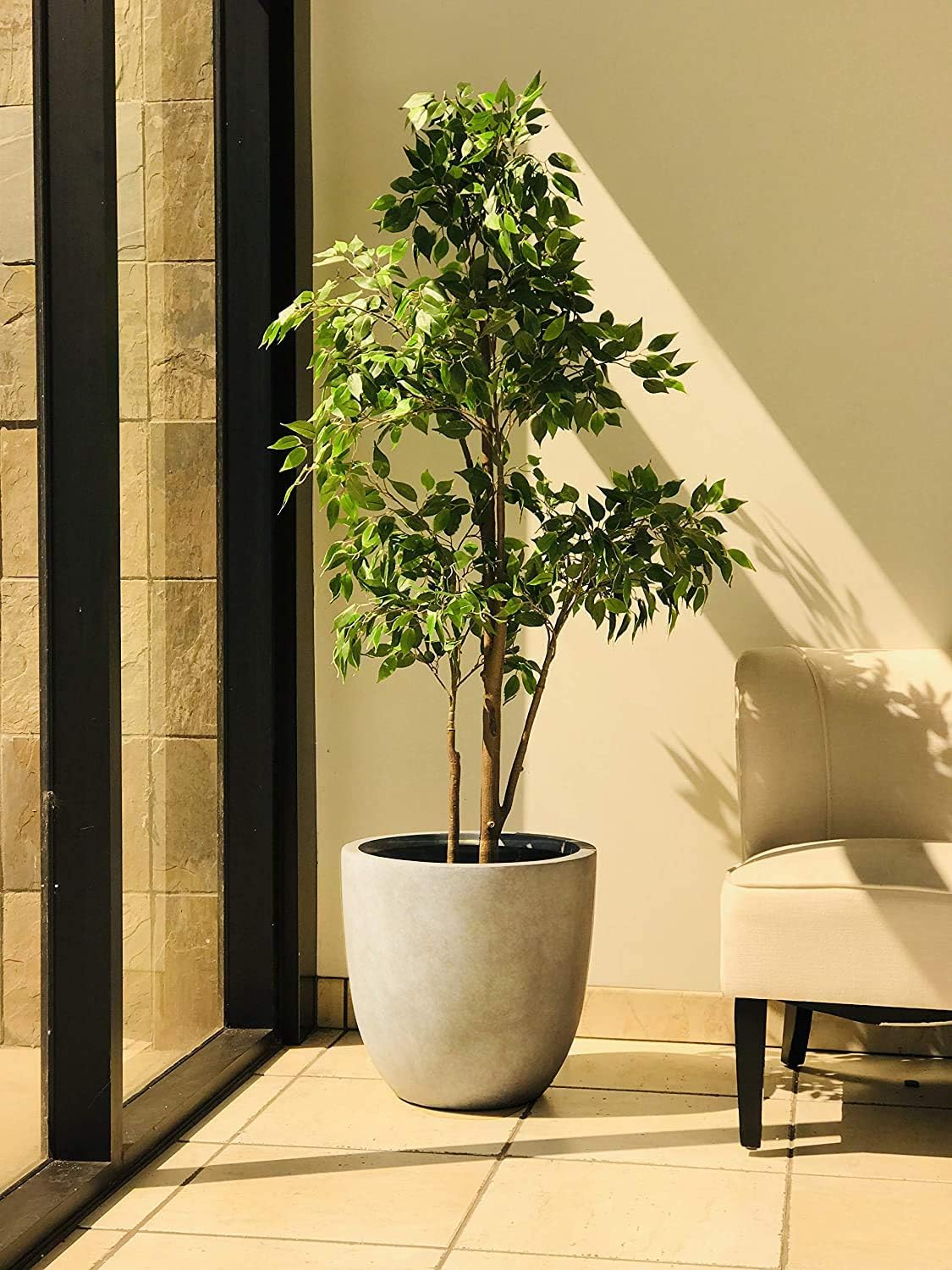
Picture this: you’ve just installed three gorgeous 28-inch architectural planters on a client’s front terrace in Denver or Minneapolis — serious investment, maybe $800 total — and by April, two of them have spider-web cracks running up the sidewall. The plants survived the winter. The planters didn’t. That’s the freeze-thaw problem in a nutshell, and it’s entirely avoidable if you know what to look for before you buy.
“Frost-rated” is the shorthand the industry uses for planters built to survive repeated freeze-thaw cycles — meaning the planter’s material can absorb the expansion and contraction of moisture inside its walls as temperatures swing above and below 32°F without cracking, spalling (surface flaking), or delaminating. “Decorative-only” means exactly what it sounds like: fine for a covered porch or a climate with mild winters, not engineered for repeated hard freezes. The difference isn’t marketing copy. It’s a material-science distinction — and it shows up in price, weight, and long-term replacement cost in ways worth mapping out before your next procurement decision.
Why Freeze-Thaw Damage Happens (and Why Some Materials Shrug It Off)
The mechanism is straightforward once you see it clearly. Porous materials — concrete, terracotta, some ceramics — absorb water. When that trapped moisture freezes, it expands by roughly 9 percent in volume. Do that cycle 20 or 30 times in a single Chicago or Denver winter, and even a well-made planter develops microfractures. Year two, those microfractures become visible cracks. Year three, you’re replacing the planter.
What matters for planter specification isn’t just minimum winter temperature — it’s freeze-thaw cycle count, meaning the number of times per winter that temperatures cross the 32°F threshold in both directions. A Zone 5 city like Chicago may experience 50–70 freeze-thaw cycles annually. A Zone 7 city like Washington D.C. might log 20–30. Cycle count, not minimum temperature alone, is the primary stress variable for container durability. Fine Gardening’s guidance on choosing containers for cold climates makes this point explicitly: northern gardeners should treat cycle frequency as the central spec question, not just the lowest temperature the planter will see.
Different materials handle freeze-thaw stress completely differently:
Terracotta and unglazed ceramic are the highest-risk category. These materials are inherently porous. Even so-called “frost-resistant” terracotta — a marketing phrase, not a standardized specification — can fail in high-cycle climates. Fine Gardening recommends treating standard terracotta as a single-season or bring-inside material anywhere north of Zone 7.
Concrete and cast stone vary enormously by density and mix design. High-density, low-absorption concrete can be genuinely frost-rated; the commonly cited threshold in hardscape work is water absorption below 6 percent by weight. Lightweight “faux concrete” made from fiberglass-reinforced polymer or GFRC (glass-fiber-reinforced concrete) sidesteps absorption almost entirely. This Old House’s container materials guide distinguishes between decorative cast-stone planters sold for aesthetic use and structural-grade cast concrete specified for year-round outdoor installation — a difference buyers routinely miss and one worth clarifying with any vendor before purchase.
Glazed ceramic performs better than unglazed because the glaze reduces water absorption at the surface, but the clay body underneath remains porous. A single glaze chip creates a water entry point. The Spruce’s roundup of outdoor planters flags glazed ceramic as a moderate cold-climate risk and recommends choosing pieces where the manufacturer has published absorption data or explicit freeze-thaw ratings.
High-density polyethylene (HDPE) and polypropylene are non-porous by definition. Water cannot penetrate the wall, so the freeze-thaw mechanism does not apply to the wall itself. The tradeoff is a narrower aesthetic vocabulary compared to stone or ceramic, and HDPE can develop surface brittleness under sustained UV exposure after many years. Better Homes & Gardens’ outdoor planter guidance notes that resin and polyethylene planters are among the most practical choices for gardeners in cold climates precisely because they eliminate the absorption problem entirely.
Fiberglass occupies the middle ground that design-forward buyers often prefer. Non-porous, lighter than concrete, available in finishes that credibly replicate stone, metal, or ceramic aesthetics, and typically rated for freeze-thaw performance by serious manufacturers. Fiberglass quality varies widely between manufacturers, and a thin-wall fiberglass planter from an unknown source should be treated with the same skepticism as terracotta.
Corten and powder-coated steel are dimensionally stable through freeze-thaw cycles — metal doesn’t absorb water the way porous materials do. The actual cold-climate concern with metal planters is different: thermal conductivity. Metal walls transfer cold directly to root zones, which matters if you’re overwintering perennials. For purely hardscape or annual-planting applications, metal is structurally sound year-round.
How to Read a Spec Sheet — and What “Frost-Resistant” vs. “Frost-Rated” Actually Means
Here’s where buyers consistently get tripped up: the terms “frost-resistant” and “frost-rated” are not regulated or standardized across the planter industry. A manufacturer can print either phrase on marketing materials without meeting any defined threshold. What you’re actually looking for is either a specific ASTM standard reference or a freeze-thaw cycle count with documented pass criteria.
The relevant ASTM standard for water absorption in concrete products is ASTM C642 (water absorption and specific gravity of hardened concrete). For ceramic tile — a useful analog for glazed ceramic planters — ASTM C373 covers water absorption, and products with absorption below 0.5 percent are classified as impervious. If a concrete or ceramic planter’s spec sheet references ASTM testing and a water absorption percentage, you have an actual number to evaluate. If it just says “frost-resistant,” you have a marketing claim.
Water absorption by material — a working reference:
| Material | Typical Water Absorption | Cold-Climate Risk |
|---|---|---|
| Standard terracotta | 8–15% | High |
| ”Frost-resistant” terracotta | 3–6% | Moderate-High |
| High-density cast concrete | 2–6% | Moderate (density-dependent) |
| Glazed ceramic | 1–3% surface | Moderate (chip vulnerability) |
| GFRC / fiberglass | <0.5% | Low |
| HDPE / polypropylene | ~0% | Very Low |
| Corten / powder-coated steel | ~0% | Very Low (thermal transfer separate) |
When a spec sheet is absent — common with mid-tier decorative planters sold through general home improvement channels — the practical proxy is wall thickness and weight. A genuine frost-rated concrete planter in the 18–24 inch size range will typically weigh 40–80+ pounds empty. A decorative-grade faux-concrete planter in the same size range often weighs 8–15 pounds. A dramatically light “concrete look” planter is almost always a polymer composite, and its freeze-thaw performance depends entirely on how the manufacturer engineered that composite.
Comparing Your Options by Budget and Performance Tier
The freeze-thaw material question maps neatly onto three buyer tiers, each with a different risk profile and cost-of-ownership calculation. This is where the decision framework gets practical.
Entry-Level Planters: Resin and Basic HDPE
Veradek
$80.99
In stock on Amazon
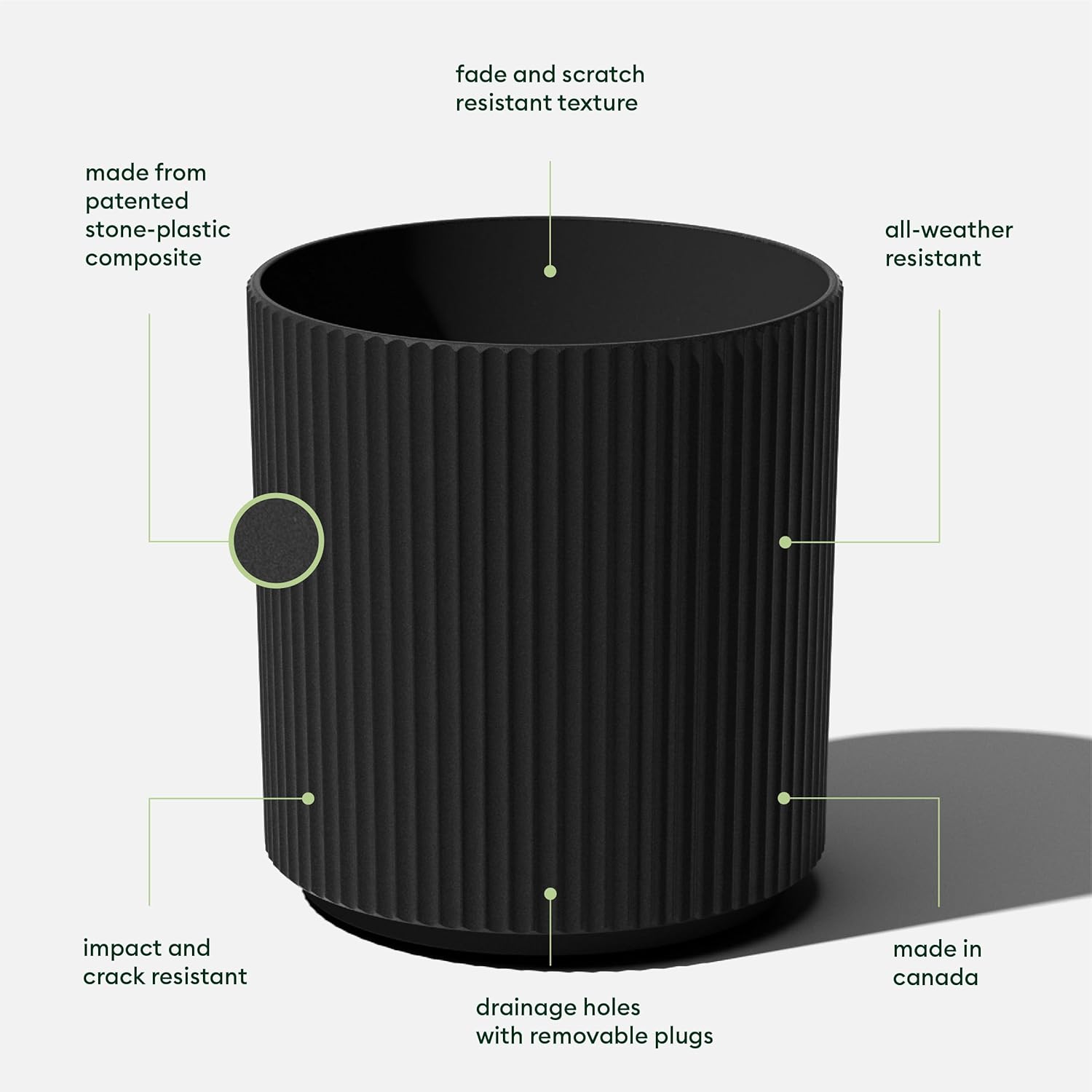
Check price on AmazonFor buyers working in the $30–$90 range, quality HDPE and polypropylene planters represent the strongest cold-climate value. The aesthetic is limited — most planters in this range come in simple geometric profiles with matte or lightly textured surfaces — but the performance is genuine. Non-porous walls mean zero freeze-thaw absorption risk, and a well-made resin planter in this price tier can run 7–10 years outdoors in Zone 4 or Zone 5 climates without cracking.
The Spruce’s outdoor planter recommendations consistently include resin options at this price point for exactly this reason: the material does what it promises without the replacement math that plagues porous alternatives. The cost-of-ownership calculation is straightforward — a $60 HDPE planter lasting 8 years costs $7.50 per year. A $90 decorative terracotta planter that cracks in year two in a Zone 5 climate costs $45 per year. Budget buyers in cold climates should direct spend toward material performance, not surface finish.
What to watch for: UV stabilizer quality varies. Ask whether the resin formulation includes UV inhibitors, or check whether the manufacturer lists outdoor rated service life. Planters without UV treatment may yellow or become brittle within 3–5 years even if they never crack from freeze-thaw stress.
Veradek
$80.99
In stock on Amazon
Check price on AmazonMid-Tier Planters: Fiberglass and GFRC
Sunnydaze
$125.00
In stock on Amazon
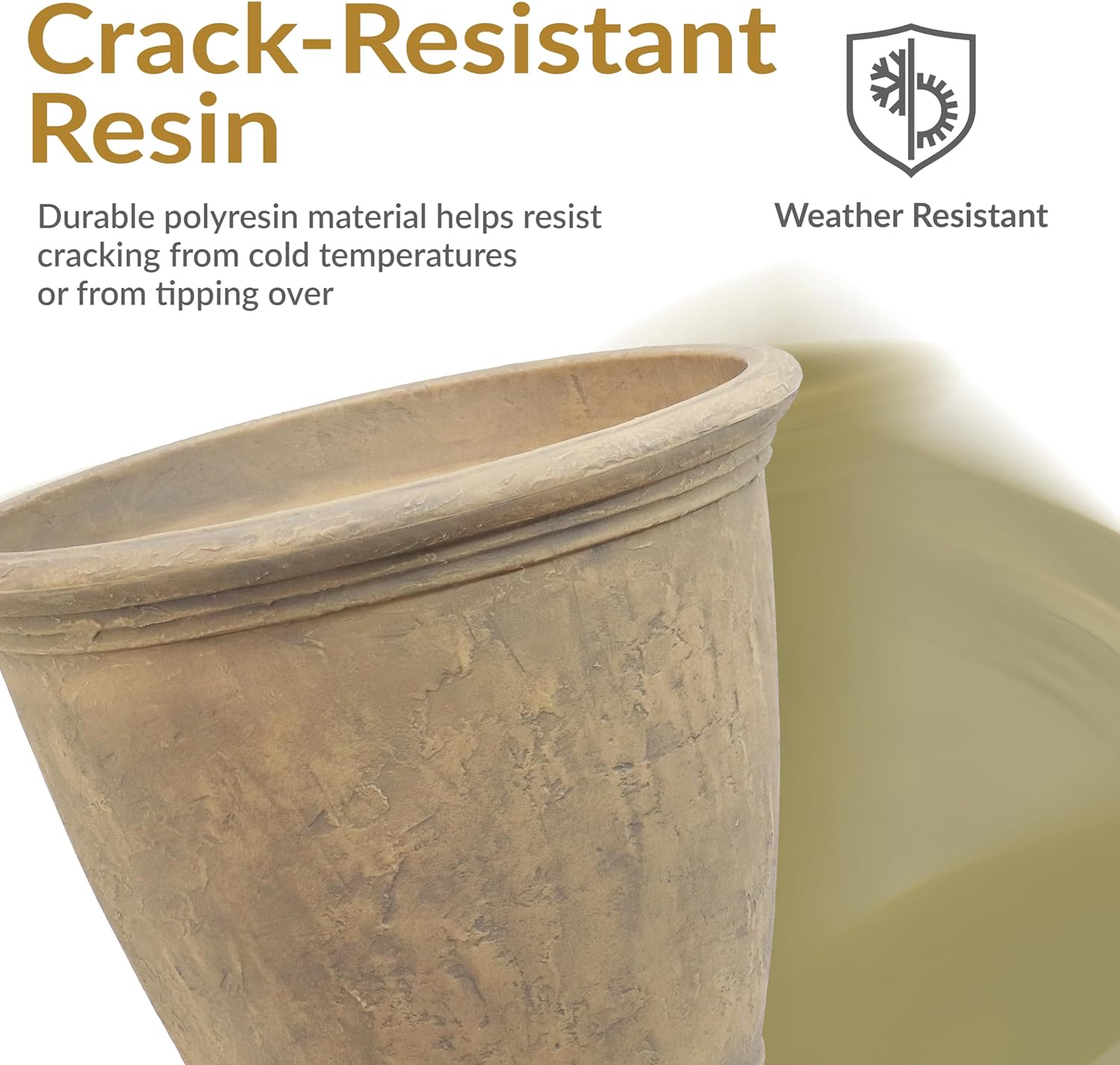
Check price on AmazonThe $120–$280 range is where design intent and cold-climate performance start overlapping meaningfully. Fiberglass and glass-fiber-reinforced concrete planters in this tier offer finishes that read as stone, aged concrete, or textured ceramic at conversational distance while delivering water absorption rates well below 0.5 percent. This Old House’s materials guide specifically calls out fiberglass as the category that “bridges the gap” between decorative ambition and structural performance for outdoor containers.
For specifiers working with clients who want architectural presence without the bring-inside winter logistics, fiberglass in a stone or concrete finish is the clearest answer in this price band. Look for manufacturers who publish freeze-thaw cycle documentation — a serious mid-tier manufacturer will specify the USDA zone range for outdoor year-round use. If that documentation is absent at the $150+ price point, treat the gap as a quality signal.
Weight is again a useful field proxy: a legitimate 20-inch fiberglass planter should weigh 12–22 pounds. A planter in the same size and price range that weighs 4–6 pounds is likely thin-wall construction that may not perform as advertised through repeated freeze-thaw cycles.
Sunnydaze
$125.00
In stock on Amazon
Check price on AmazonPremium Planters: Architectural Concrete, Corten Steel, and High-End Fiberglass
Keter
$127.49
In stock on Amazon
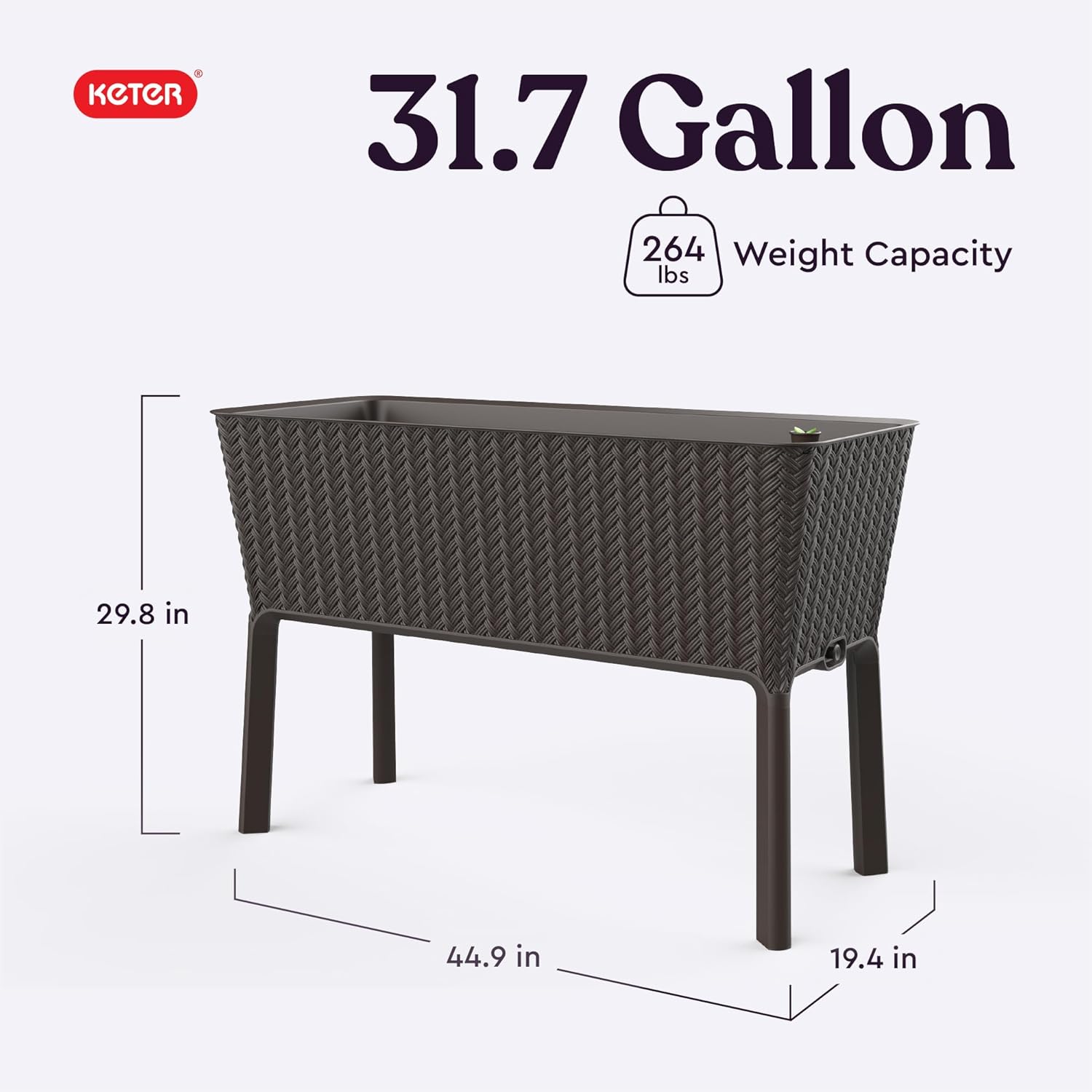
Check price on AmazonAt $300 and above, buyers are purchasing a design object as much as a functional container. In this tier, the cold-climate calculus shifts: you should require published freeze-thaw documentation from the manufacturer as a baseline condition of purchase, regardless of the material. A serious manufacturer at this price point provides ASTM-referenced absorption data or a stated freeze-thaw cycle rating. An absent spec sheet at $300+ is not a minor oversight — it is a meaningful quality signal about how the product was engineered.
Better Homes & Gardens’ guidance on choosing premium outdoor planters notes that the “buy once” calculation is most persuasive in cold climates: a $350 frost-rated architectural planter amortized over 12–15 years costs $23–$29 per year. A $150 decorative concrete planter replaced every two years in a Zone 5 climate costs $75 per year — more than double the apparent bargain.
Corten steel at this tier performs structurally through any freeze-thaw cycle count, but buyers overwintering perennials should account for the thermal conductivity issue — metal walls can drive root-zone temperatures down faster than insulating materials. For purely annual or hardscape applications, Corten is one of the most durable cold-climate options available at any price. Powder-coated steel planters in architectural finishes are similarly robust, with the caveat that chip damage to the coating should be touched up promptly to prevent underlying rust.
Keter
$127.49
In stock on Amazon
Check price on AmazonThe Decision Framework: If X, Then Y
If your project is in USDA Zone 6 or colder AND the planter will remain outdoors year-round: Specify non-porous material only — HDPE, polypropylene, fiberglass with manufacturer freeze-thaw documentation, Corten steel, or powder-coated steel. Any porous material (terracotta, unglazed ceramic, standard cast stone) is a replacement liability within 2–4 seasons.
If your project is in Zone 6 or colder AND the planter will be brought indoors or into a protected space before first hard freeze: Full material latitude. Document the bring-inside requirement explicitly in any client specification — it’s a maintenance obligation they need to own.
If your project is Zone 7 or warmer (20–30 freeze-thaw cycles annually or fewer): Quality glazed ceramic, high-density cast concrete with ASTM-referenced absorption data, and GFRC are all reasonable. Avoid unglazed terracotta in Zone 7 if freeze-thaw cycles are even occasional.
If the client is investing $300+ in a single planter and wants a 10-year-plus lifespan: Require published freeze-thaw documentation from the manufacturer regardless of climate zone.
If budget is the primary constraint: A quality HDPE or polypropylene planter in the $40–$80 range outperforms a $120 decorative ceramic in cold climates. Direct the budget toward the material that performs, not the finish that photographs well.
The freeze-thaw problem is one of those decisions that feels invisible until it isn’t — and by then, you’re explaining a cracked planter to a client in March. The spec work takes 10 minutes. The replacement conversation takes considerably longer.