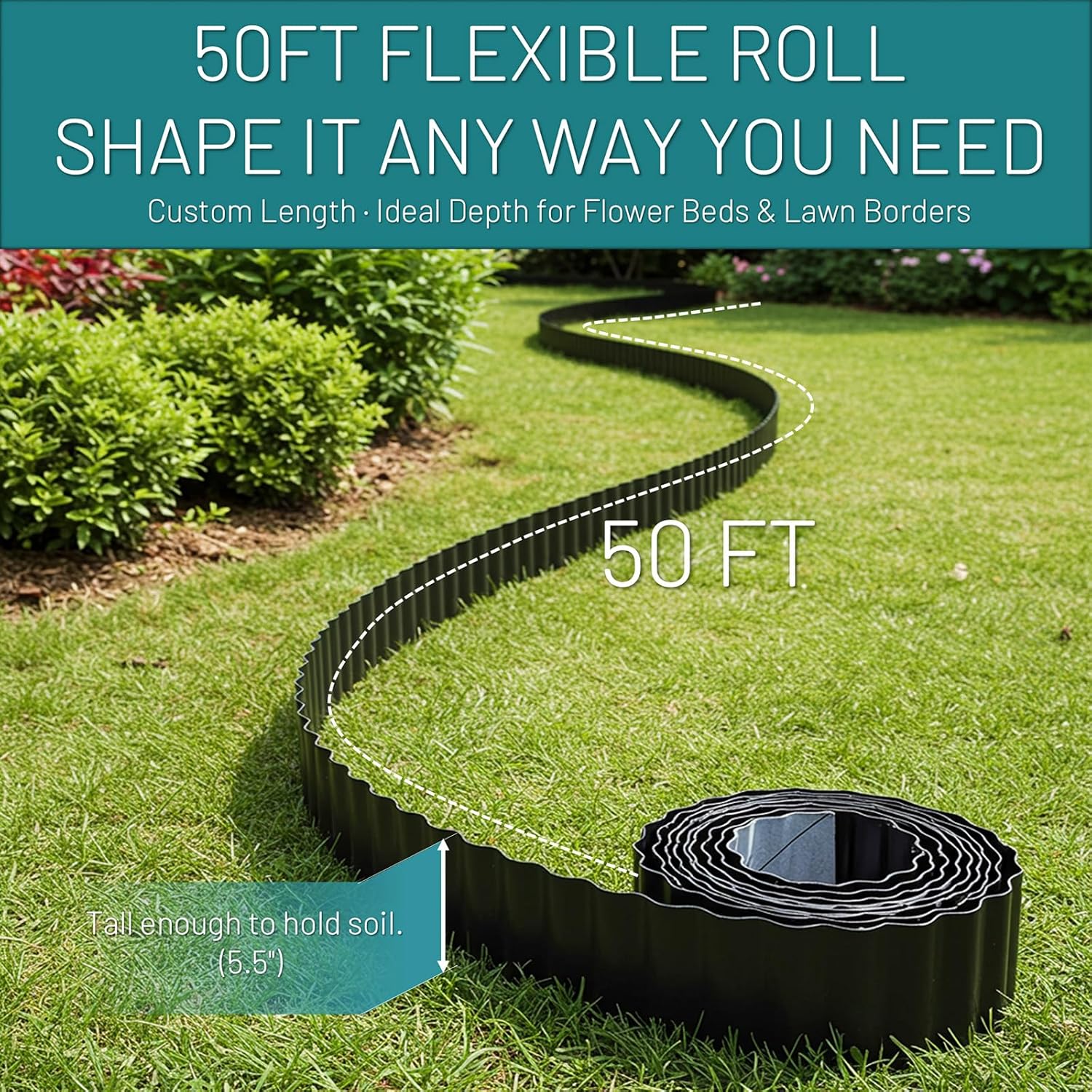
You’ve just sketched a planting plan with a sweeping kidney-shaped bed on one side of the yard and a dead-straight driveway border on the other. Now you’re standing in front of two completely different products at the supply house, both labeled “landscape edging” — and they are not interchangeable. Corrugated roll edging (sometimes called flexible roll edging) ships coiled on a spool; its thin, corrugated — meaning ridged for lateral flex — profile lets it curve around almost any shape you can imagine. Rigid strip edging comes in 8- or 20-foot sections and holds a firm profile under soil pressure. Both keep mulch from migrating into lawn and grass from sneaking into beds. But choosing the wrong one for a given application means callbacks, reset labor, or an install that looks sloppy by year two. This article breaks down the tradeoffs on material, geometry, gauge, installation, longevity, and price-per-linear-foot — so you can spec confidently before the first stake goes in.
The Core Tradeoff: Geometry vs. Ground Pressure
Here is the fundamental tension: corrugated roll edging achieves its flexibility by thinning and pleating the wall profile, which is exactly what makes it easy to bend around a tight radius. Rigid strip edging achieves its stiffness by using a thicker, smoother gauge — typically heavier-wall steel or reinforced PVC — which is exactly what makes it resist lateral soil pressure over time.
This is not a flaw in either product. It is physics. When you corrugate a thin sheet of metal or plastic, you increase its resistance to lengthwise bending (along the top edge) but you reduce resistance to face pressure — the kind that pushes the wall sideways when wet clay soil expands after a rain. Rigid strip edging resists that face pressure well, but will crack or kink if you try to force a tight curve without scoring cuts or a heat gun.
The practical translation:
- Corrugated roll edging is the right call when your plan has curves with a radius tighter than roughly 24 inches, or when the layout is likely to evolve over one to three seasons.
- Rigid strip edging is the right call when the border runs straight or in gentle curves, when you are retaining a significant height differential (3–4 inches of mulch above lawn grade), or when you are specifying a permanent install where visual crispness is a deliverable.
Fine Gardening, in their article “Edging Your Garden Beds,” notes that corrugated aluminum roll edging is particularly well-suited for informal, flowing designs while recommending heavier-gauge flat edging for formal or geometric bed layouts — a distinction that landscape designers consistently echo when specifying materials for client installs.
Material Options and Tier Comparisons
Neither category is monolithic. The decision within each type often comes down to budget, climate zone, and permanence of the installation.
Budget-Tier Options: Corrugated Plastic Roll and Entry Steel
Corrugated plastic roll edging — made from polyethylene or PVC — is the lightest and least expensive option in the flexible category, typically running $0.08–$0.18 per linear foot. The Spruce, in their overview “Types of Lawn Edging,” notes that plastic roll edging is adequate for low-traffic garden borders but is more prone to rising out of the ground in climates with hard freezes, a problem the trade calls frost heave — the ground expanding as it freezes pushes the edging upward. Corrugated steel roll edging sits at a comparable entry-level price point ($0.15–$0.35/LF) but introduces rust risk if the coating is thin or scratched during installation.
When to choose: Single-season or low-permanence applications in USDA Hardiness Zone 7 or warmer. Not recommended for raised-bed applications or any project where re-setting every two to three springs would create a client service problem.
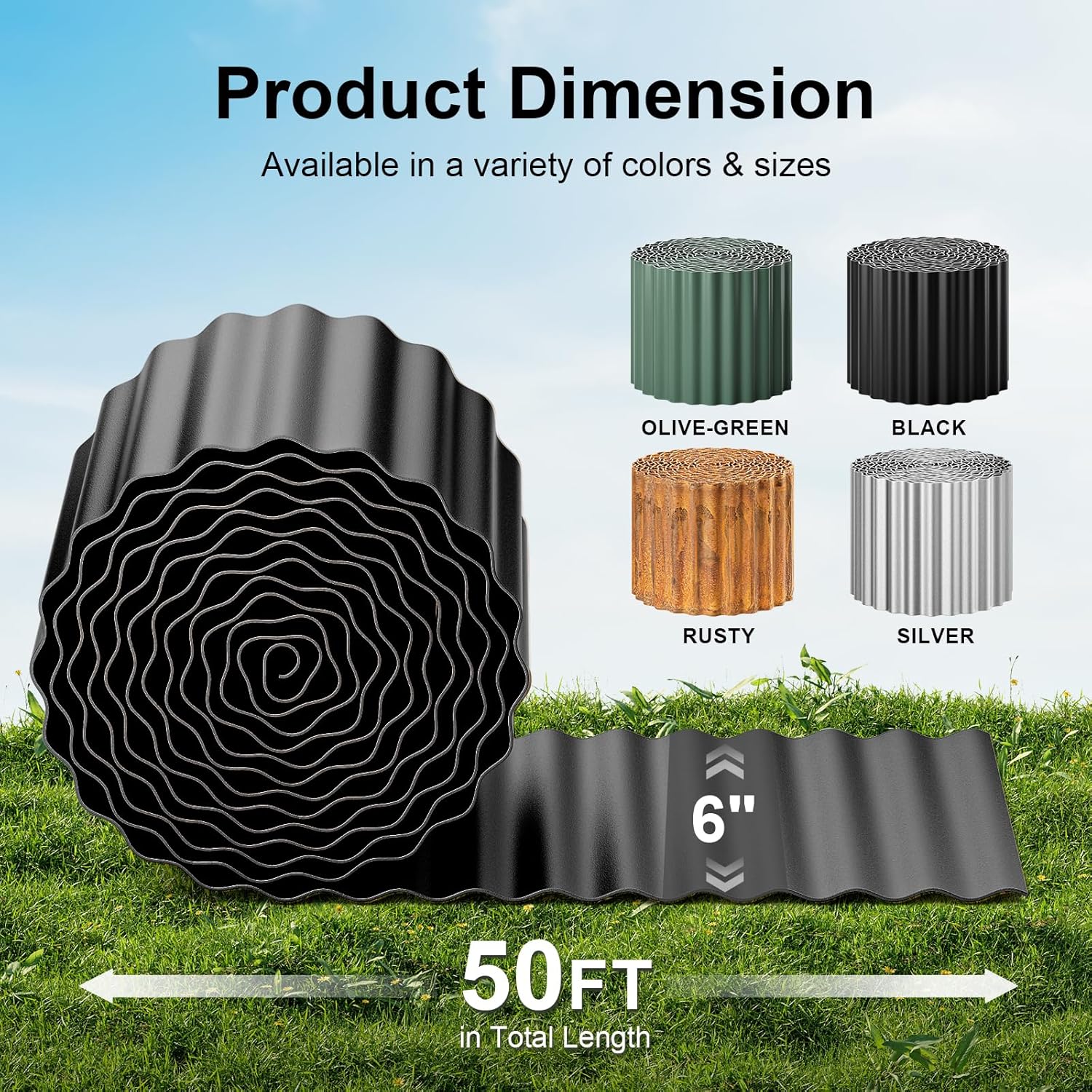
Land
$25.99
In stock on Amazon
Check price on AmazonMid-Tier Options: Corrugated Aluminum Roll and Composite Rigid Strip
Corrugated aluminum roll edging is the most widely specified option in the 4–5 inch depth range among professional installers. Aluminum will not rust, which matters in humid climates and drip-irrigated zones that stay consistently moist. Published manufacturer gauge specs typically run 0.05 to 0.08 inches thick (roughly 16–18 gauge aluminum). This Old House, in their buyer’s guide “Best Landscape Edging,” identifies aluminum roll edging as the most durable flexible option for residential professional installs, noting that it holds its shape better over time than comparably priced plastic and resists the frost-heave pattern seen in plastic products across northern climates.
Composite and recycled-content rigid edging represents a growing mid-tier segment. These products are lighter than metal, typically UV-stabilized, and priced at roughly $0.45–$0.85/LF. The Landscape Architecture Foundation has noted in hardscape materials guidance that recycled-content composite edging has improved significantly in rigidity over the past decade, but still shows higher linear expansion rates in high-heat climates than metal alternatives — a spec detail worth flagging in Sun Belt markets.
When to choose: Corrugated aluminum is the most defensible single-product compromise when a project spans both curved and moderately straight sections. Composite rigid edging suits design-forward residential installs where recycled-content certification adds value but mower-contact durability is not a primary concern.
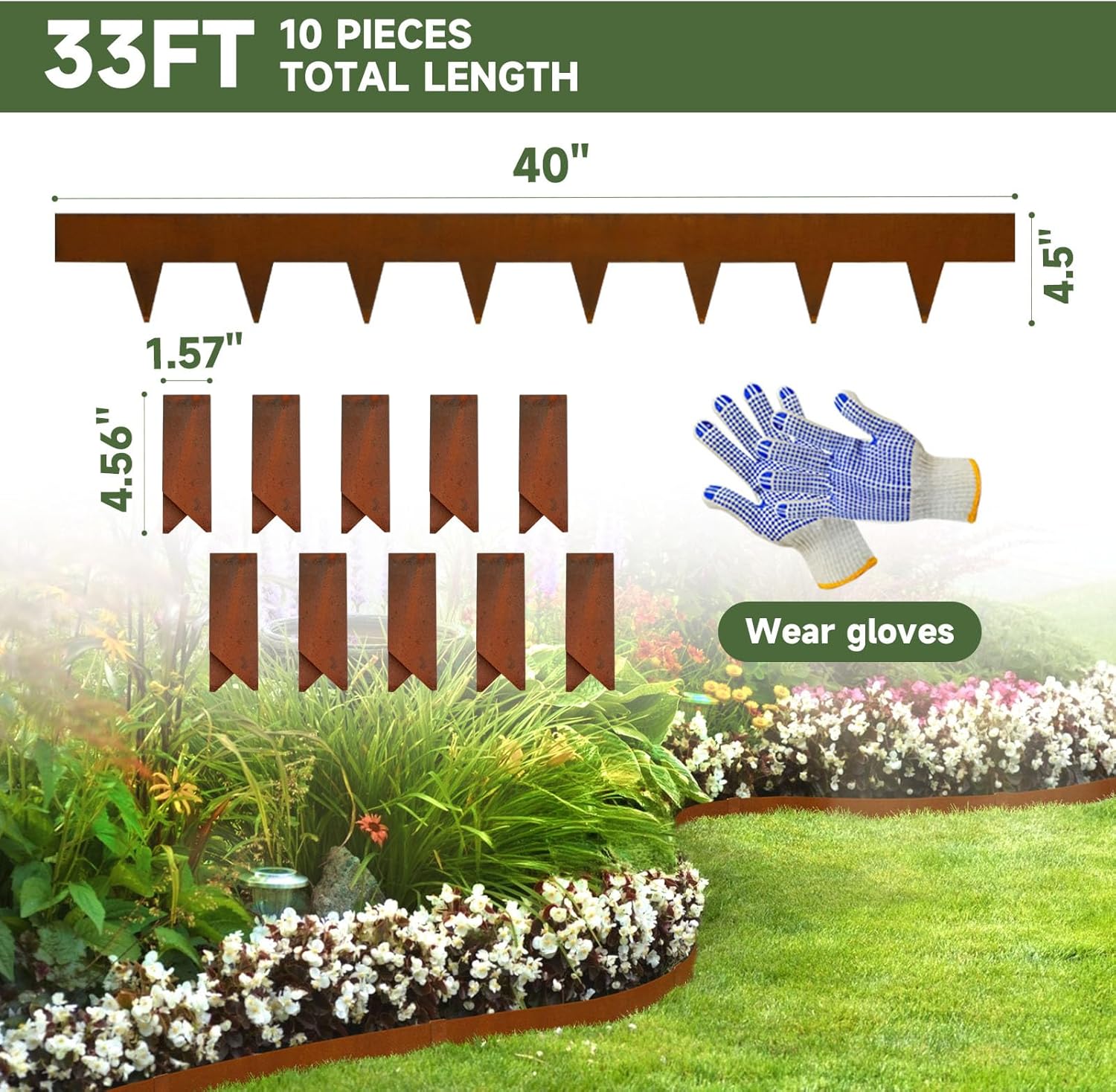
Corten
$66.00
In stock on Amazon
Check price on AmazonPremium-Tier Options: Rigid Steel Strip and Rigid Aluminum Strip
Rolled-top steel strip edging — the profile common in EverEdge-style products — typically runs 3/16-inch thick steel in 10- or 16-foot sections, with a rounded top bead for safety and mower resistance. Street pricing currently ranges from $0.55–$1.10/LF. The rounded top resists deformation under mower contact better than flat-top alternatives, and the face gauge is heavy enough to hold back 3+ inches of height differential between a raised bed and lawn grade without bowing over time.
Rigid aluminum strip edging carries a 20–35% price premium over equivalent steel — generally $0.90–$1.60/LF — but eliminates rust entirely. This is the specification used in permanent design installs where the edging itself is a visible design element: a crisp aluminum line along a bluestone walk reads as intentional and architectural in a way that corrugated plastic never will. BHG, in their article “Garden Edging Ideas,” highlights rigid metal strip edging as the finish-quality choice for formal garden designs where the edging profile contributes to curb appeal alongside the plantings.
When to choose: Straight or gently curved formal borders, driveway edges, raised beds with significant height differentials, or any install where the client treats the edging as a permanent visual feature rather than a functional-only barrier.
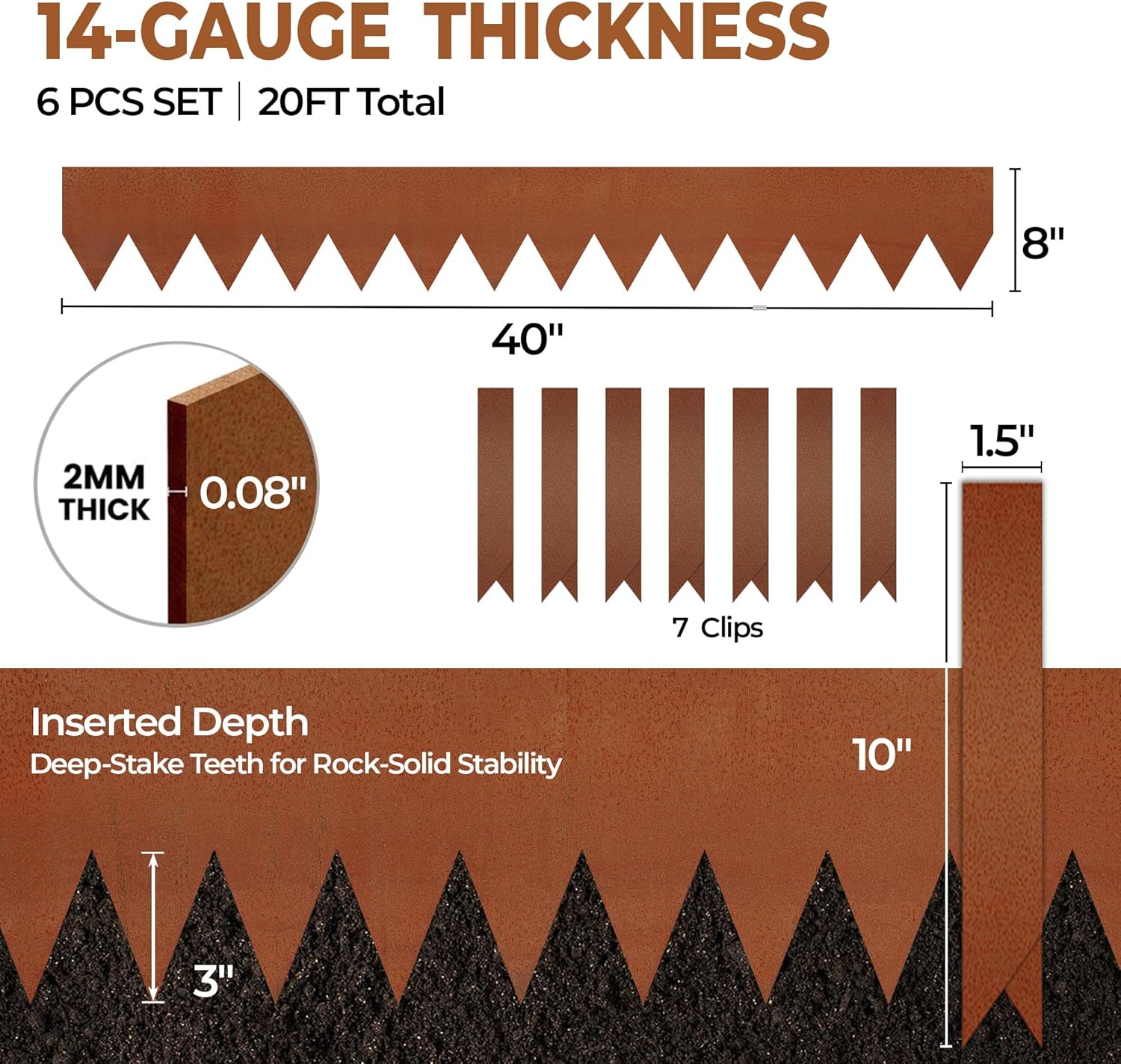
Worth
$99.99
In stock on Amazon
Check price on AmazonPrice-Per-Linear-Foot Reality Check
For a 200-linear-foot install — a realistic scope for a mid-size residential redesign — the delta between corrugated aluminum and premium rigid steel is roughly $60–$120 in material alone, before labor. That gap narrows or disappears when you account for labor savings from easier corrugated installation around curves. The Spruce’s “Types of Lawn Edging” overview notes that flexible roll edging typically installs meaningfully faster in curved layouts than cutting and joining rigid sections to approximate the same geometry.
| Product type | Typical range ($/LF) | Notes |
|---|---|---|
| Corrugated plastic roll | $0.08–$0.18 | Entry-level; frost performance varies |
| Corrugated steel roll | $0.15–$0.35 | Cheaper upfront; coating quality is critical |
| Corrugated aluminum roll | $0.25–$0.50 | Mid-tier; rust-free; most common pro spec |
| Composite rigid strip | $0.45–$0.85 | Variable quality; check expansion specs |
| Rigid steel strip | $0.55–$1.10 | EverEdge and similar profiles |
| Rigid aluminum strip | $0.90–$1.60 | Premium; permanent design installs |
The math flips on straight runs. On a 60-foot driveway border where rigid strip goes in as a single section with minimal joining, the faster installation and higher resistance to soil creep may justify the premium — especially when the client is treating the edging as a visual design element rather than a purely functional barrier.
Installation and Long-Term Performance
Corrugated roll edging is genuinely forgiving in the field. You unroll, shape, stake — typically every 24–36 inches for aluminum, every 18–24 inches for plastic to prevent wave — and backfill. The corrugated profile compresses slightly as you drive stakes, creating a tighter soil interface. The main failure mode: under-staking on curves, which allows the edging to migrate outward as soil pressure builds through the growing season. BHG’s “Garden Edging Ideas” recommends moving to 18-inch stake spacing on curves tighter than 18-inch radius to counteract outward migration.
Frost heave is the other consistent failure pattern with corrugated plastic specifically. In USDA Hardiness Zones 5 and colder — where ground freeze depth can exceed 12 inches — plastic roll edging often requires re-setting every two to three springs. Aluminum and steel corrugated products handle freeze-thaw cycles significantly better due to their mass and the mechanical grip of a deeper stake pattern.
Rigid strip edging is more precise and less forgiving. Sections need to be butt-joined or lapped correctly to avoid gaps; on long straight runs, thermal expansion can push joined sections apart if they are pinned too tightly at the joins. Published installation instructions for rigid steel edging products typically call for a 1/8-inch gap at all joins to accommodate seasonal expansion — a detail that installers new to the category frequently miss on their first installs. Staking at 24-inch intervals is standard on straight runs, reduced to 18 inches approaching any corner.
The long-term performance advantage of rigid strip edging is clearest where soil pressure is high. In raised-bed applications with 3 or more inches of height differential between bed and lawn, corrugated edging will bow outward over one to two seasons under the lateral pressure of settled soil and mulch. Rigid strip’s uniform face gauge resists this. Rigid metal edging — particularly rounded-top steel profiles — is also substantially more resistant to mower and trimmer damage than corrugated roll, which can catch a trimmer line and kink.
The If-Then Decision Frame
After running geometry, material, climate zone, and budget through the variables above, the decision almost always resolves to one of these scenarios:
If the layout has curves tighter than 24-inch radius → corrugated roll edging; aluminum if the budget allows, plastic only in Zone 7 or warmer and in low-permanence applications.
If the install is a straight or very gently curved formal border, or includes a height differential of 3+ inches → rigid strip edging; upgrade to aluminum if the project is a permanent design install or if the client treats the edging profile as a visible design element.
If the project spans both conditions — a common reality, with curved back beds and a straight driveway border — spec both. There is no rule requiring a single property to use a single edging type. Many experienced residential installers run corrugated aluminum through the curved rear beds and rigid rolled-top steel along the driveway and front walk; the visual profile is close enough that it reads as intentional rather than inconsistent.
If budget is the binding constraint and geometry is mixed → corrugated aluminum roll is the most defensible single-product compromise. It bends around moderate curves, resists rust and frost better than plastic, and at roughly $0.25–$0.50/LF it remains a manageable line item even on a 300-foot install.
The edging category rarely makes or breaks a landscape job on its own — but callbacks from edging that failed, migrated, or looked wrong in year two are real costs, and they compound. Getting the spec right upfront is the kind of detail that separates an installer who earns referrals from one who earns redos.