You’re standing on a client’s property — new construction, a clean slate — and you need to spec the bed edging before the mulch crew shows up next week. Two quotes are sitting on your desk: one for COR-Ten steel (a weathering-steel alloy that deliberately oxidizes on its outer layer to form a protective patina barrier), and one for hot-dip galvanized steel (carbon steel coated in molten zinc to resist corrosion from the outside in). Both look like the right tool. Both are priced differently. Both come with very different stories about what happens in year three, year five, and year ten. This article breaks down the real comparison — gauge by gauge, finish warranty by finish warranty, and dollar by linear foot — so you can make a defensible specification decision today.
Why Gauge Is the First Number You Should Pin Down
Gauge is the thickness of the steel strip, and it’s the single biggest driver of both performance and price. Here’s the frustrating part: gauge numbering runs backward — a lower gauge number means thicker steel. Landscape edging lives in a range from 16 gauge (approximately 0.060 inches) down to 10 gauge (approximately 0.135 inches), per the Steel Recycling Institute’s Gauge-to-Thickness Reference for Carbon and Alloy Steel Sheet.
What gauge does in the field:
- Bending radius: Thinner steel (16 ga) takes curves more easily and installs faster on organic, curving bed lines. Thicker steel (12–10 ga) holds a rigid, architectural straight line — ideal for formal parterre layouts, driveway borders, or when the edging doubles as a grade-change retainer.
- Spike pull-out resistance: Heavy gauge steel resists lateral movement under sod pressure and foot traffic. If you’re edging adjacent to a high-traffic turf corridor, 12 ga or thicker pays for itself in reduced re-stake callbacks.
- Visual weight: 10–12 ga edging has a visible profile that reads as a deliberate design element. 16 ga essentially disappears at grade — which is either a feature or a bug depending on the design brief.
The gauge comparison between COR-Ten and galvanized isn’t apples-to-apples by default. Most domestic COR-Ten landscape edging is produced at 10 or 12 gauge because the alloy’s value proposition — long patina life, architectural look — is positioned at the premium design market. Most galvanized edging spans a wider range: budget galvanized starts at 16 gauge, and some premium brands manufacture their galvanized product at 16 ga with a proprietary top-flange profile that compensates structurally for the thinner strip.
That rolled top-flange design is a legitimate engineering trade-off — but it matters when you’re comparing stiffness spec-to-spec against a 12 ga COR-Ten strip. As The Spruce notes in its landscape edging buyer guidance, the optimal choice depends on bed geometry and how much lateral soil pressure the edging will face. Stiffer isn’t always better; it depends on the install.
Finish Warranties and What They Actually Cover
This is where practitioners get burned most often: reading a warranty headline number without reading the scope.
H3: Budget Tier — Galvanized Steel at Entry Level
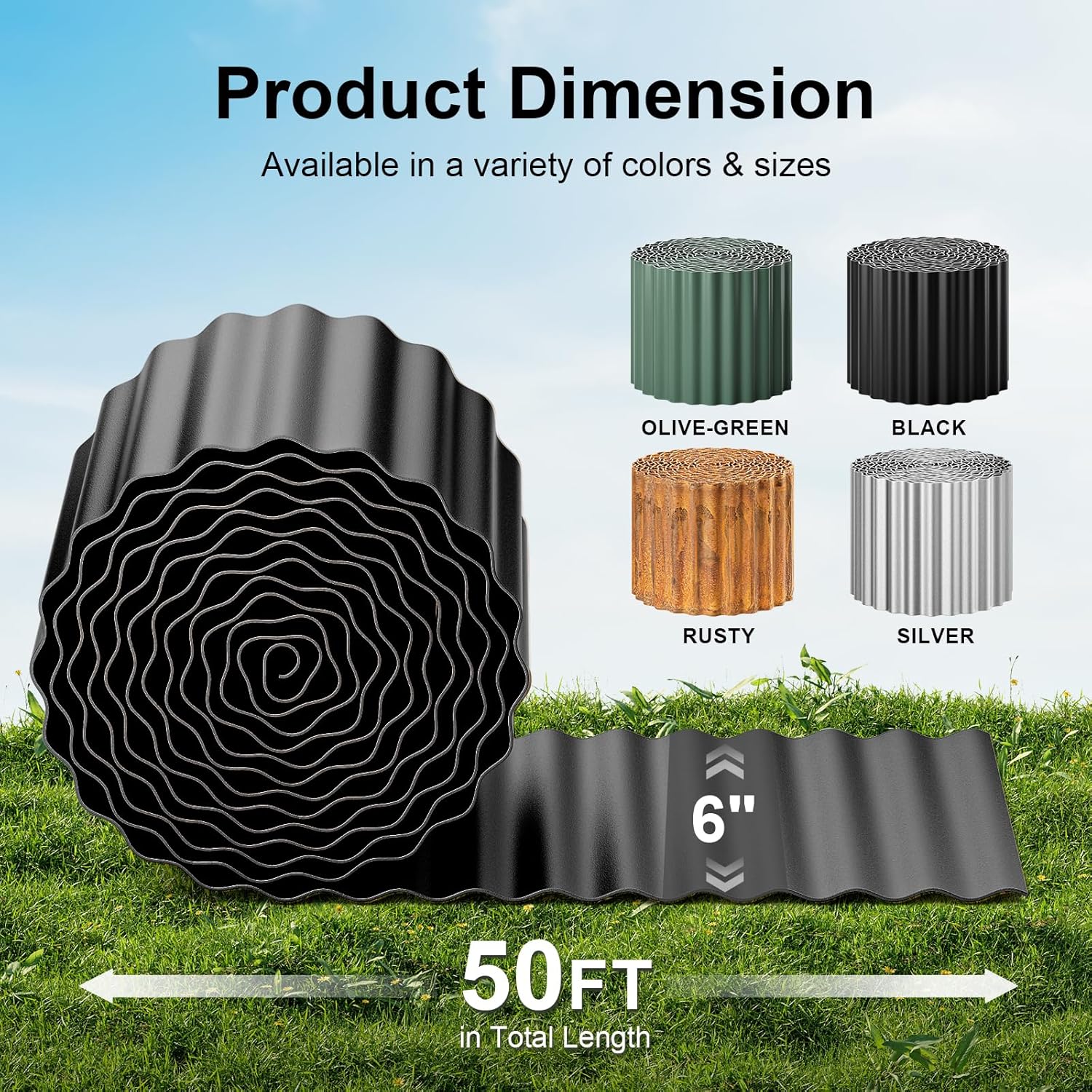
Land
$25.99
In stock on Amazon
Check price on AmazonGalvanized steel finish warranties — when they exist — typically cover zinc-coating adhesion and delamination, not surface rust bleed or cosmetic staining. The American Galvanizers Association’s publication Hot-Dip Galvanizing for Corrosion Protection: A Specifier’s Guide explains that hot-dip galvanizing on sheet steel provides a zinc layer that sacrificially corrodes before the base steel does. For landscape edging buried partially in soil, that zinc layer is doing real work against ground moisture, fertilizer salts, and irrigation cycle saturation.
Many galvanized edging products at the budget tier carry limited warranties covering manufacturing defects but explicitly exclude corrosion damage caused by contact with fertilizers, soil amendments, or supplemental irrigation. Read that clause carefully before you spec galvanized into a multi-zone drip bed where fertilizer injection is part of the system. Fine Gardening’s material guidance on landscape edging longevity notes that soil chemistry — particularly pH extremes and fertilizer salt concentration — meaningfully shortens the effective life of zinc-coated steel in below-grade contact.
For soil-contact applications, the American Galvanizers Association recommends specifying a minimum coating weight using G90 or G115 designations (90 or 115 grams of zinc per square meter, double-sided). Requiring this in your specification language gives you a defensible performance floor that the word “galvanized” alone does not. Entry-level galvanized at 16 ga typically carries a 1–3 year limited warranty covering defects only, at a material cost of roughly $0.55–$0.90 per linear foot.
Land
$25.99
In stock on Amazon
Check price on AmazonH3: Mid Tier — Galvanized Steel with Premium Coating
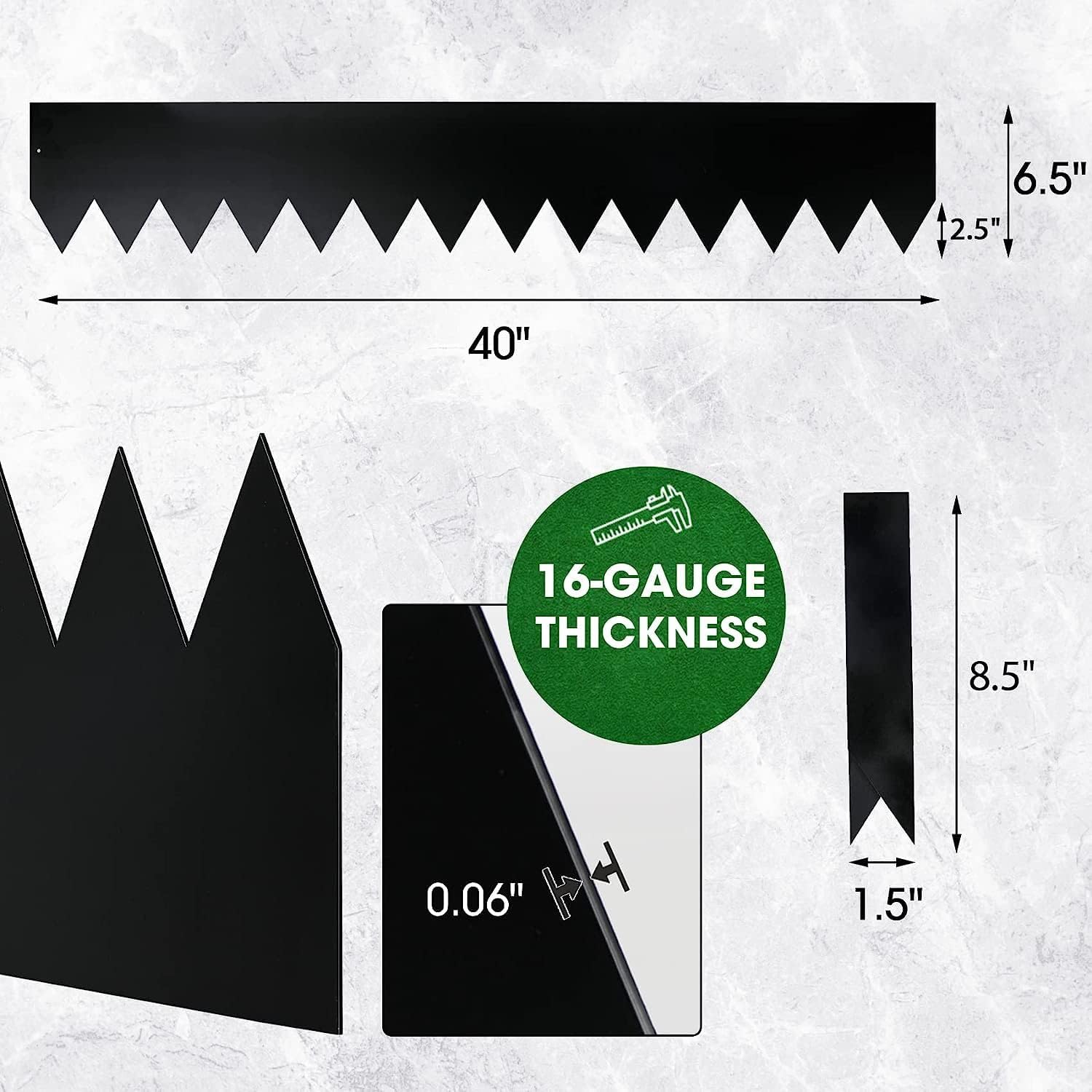
Worth
$79.99
In stock on Amazon
Check price on AmazonMid-tier galvanized edging — typically 14–16 ga with a verified G90 or higher coating weight — represents the most common professional specification for standard residential and light commercial installs. Warranty terms in this tier generally run 5–10 years on a limited basis, covering delamination and section failure but not cosmetic oxidation at cut edges or ground-contact faces.
The Spruce’s landscape edging buyer guidance identifies this tier as the most commonly recommended for practitioners who need a reliable specification without the premium COR-Ten budget allocation. An engineered top-flange profile on the strip compensates structurally for the thinner gauge, providing meaningful stiffness in straight-run applications. Material cost in this tier runs approximately $1.10–$1.75 per linear foot, and the coating weight provides genuine below-grade protection that aligns with typical 5–10 year maintenance contract cycles.
Worth
$79.99
In stock on Amazon
Check price on AmazonH3: Premium Tier — COR-Ten Weathering Steel
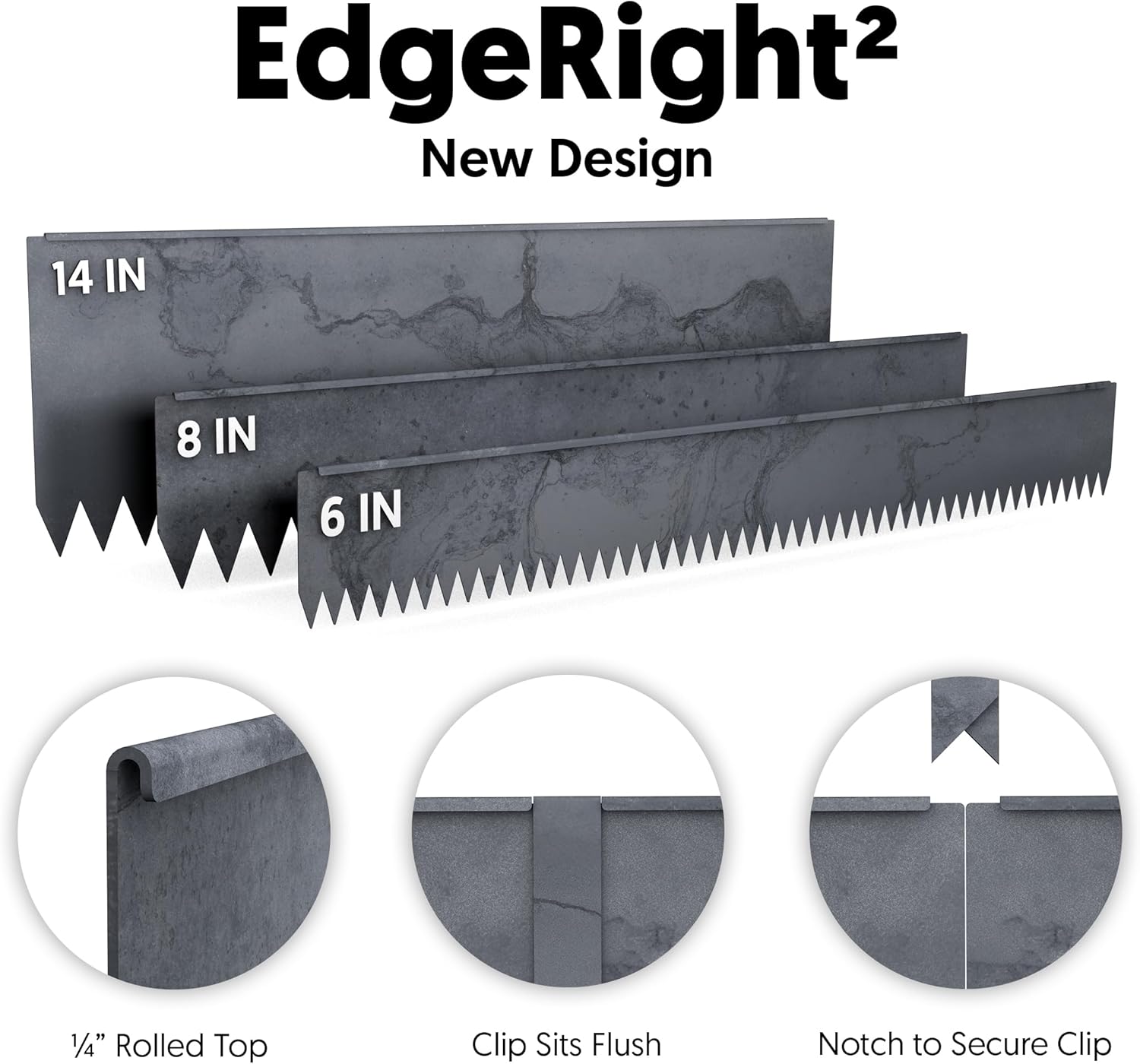
Edge
$150.00
In stock on Amazon
Check price on AmazonCOR-Ten finish warranties work differently because the product’s performance mechanism is controlled surface oxidation. ASTM International’s ASTM A606 Standard Specification for Steel, Sheet and Strip, High-Strength, Low-Alloy, Hot-Rolled and Cold-Rolled, with Improved Atmospheric Corrosion Resistance describes how the alloy — typically containing copper, chromium, and nickel additions — forms a dense, tightly adherent oxide layer (the patina) that slows further corrosion. Manufacturers generally do not warrant the patina cosmetically, because variation in color and texture is inherent to the material. What they do warrant is structural integrity — that the section won’t perforate within a specified period, typically 10–20 years depending on the brand and environment.
The install-environment caveat for COR-Ten is real and consistently underweighted in sales conversations. ASTM A606 notes that weathering steel performs best in alternating wet-dry cycles with good airflow — conditions that allow the patina to cure properly. In perpetually saturated soil (poorly drained clay beds, constant drip saturation, or coastal spray zones), the patina never fully stabilizes and corrosion can proceed faster than the warranty assumption. This Old House, in its editorial coverage of steel garden edging installation and material selection, flags this concern directly: COR-Ten installed in permanently wet ground can behave more like ordinary carbon steel within a few seasons, erasing the patina-protection advantage that justifies the premium price point.
If a client wants the COR-Ten aesthetic in a wet zone, specify a product with an additional powder-coat or sealant finish on the below-grade face. Some fabricators offer this hybrid; it typically adds $0.30–$0.60 per linear foot but addresses the saturation vulnerability without abandoning the design intent. COR-Ten at 12 ga runs approximately $1.80–$2.60 per linear foot with a 10–15 year structural warranty; 10 ga runs $2.50–$4.00 or more per linear foot with a 15–20 year structural warranty.
Edge
$150.00
In stock on Amazon
Check price on AmazonPrice-Per-Linear-Foot: The Full Cost-Per-Year Comparison
Prices below reflect aggregated market survey data from distributor catalogs and manufacturer MSRP sheets as of mid-2026. Regional variation exists; use these as a calibration baseline, not a bid number.
| Tier | Material & Gauge | Price Range (per LF) | Typical Warranty |
|---|---|---|---|
| Land — $25.99 | Galvanized steel, 16 ga (budget) | $0.55–$0.90/LF | 1–3 yr, defects only |
| Worth — $79.99 | Galvanized steel, 14–16 ga (premium coating) | $1.10–$1.75/LF | 5–10 yr limited |
| Edge — $150.00 | COR-Ten steel, 12 ga | $1.80–$2.60/LF | 10–15 yr structural |
| Edge — $150.00 | COR-Ten steel, 10 ga | $2.50–$4.00+/LF | 15–20 yr structural |
A 200-linear-foot install — a reasonable single-family residential project with four to six defined beds — spans a total material cost of roughly $110–$800 depending on where you land on this spectrum. The cost-per-year math generally favors COR-Ten on projects where the edging is intended as permanent infrastructure. A 12 ga COR-Ten install at $2.20 per linear foot over a 15-year structural warranty works out to roughly $0.15 per linear foot per year. A budget galvanized install at $0.70 per linear foot replaced twice in that same window totals $1.40 per linear foot in materials — cheaper per year on materials alone, but with two mobilizations and two sets of labor hours included.
Labor for removal and reinstall typically runs $0.40–$0.80 per linear foot in the current market. Once that labor cost is factored in, galvanized’s annual cost advantage narrows or reverses on projects over 150 linear feet. Fine Gardening’s guidance on edging material selection reinforces this framing: for clients managing long-term landscape capital budgets, the structural warranty on heavy-gauge COR-Ten functions as a risk-transfer mechanism that justifies the line-item premium in a bid package.
The Decision Frame: Matching Material to Site
After working through the gauge and warranty variables, most specification decisions resolve into a legible matrix.
If the design brief calls for a visible, architectural edge and the budget supports it, specify COR-Ten at 12 ga or heavier. The patina is a deliberate design element that ages into the landscape rather than against it. Paired with decomposed granite, crushed basalt, or decorative lava mulch, COR-Ten reads as intentional and supports premium positioning in a proposal.
If the install is in a perpetually wet zone — heavy clay, coastal, or a high-frequency drip-irrigated bed — galvanized at 14–16 ga with a verified G90 or G115 coating weight is the more reliable call. The COR-Ten patina advantage disappears in saturated conditions; you want zinc sacrificial protection doing active work, not a patina that never fully cures.
If budget is the primary constraint and permanence isn’t the goal — phased installs, rental properties, staging for resale — galvanized at 16 ga from a mid-tier brand is the rational choice. The lower entry cost and reasonable cosmetic life match the project’s time horizon without over-specifying.
If you’re building a specification for a boutique property manager or HOA with a 10-year maintenance plan, the COR-Ten structural warranty aligns with the planning horizon in a way budget galvanized doesn’t. Include the warranty documentation in the bid package — it’s a differentiator that justifies the line-item premium to a client managing long-term capital budgets.
Installation Details That Shift the Total Cost
Two installation factors that practitioners consistently underweight:
Stake spacing and pull-out depth. Heavier gauge steel requires fewer stakes per linear foot because the strip itself resists lateral movement. A 16 ga product with a top-flange profile typically calls for stakes at 36-inch centers in firm soil. A 12 ga COR-Ten strip in the same soil often holds at 48-inch centers. On a 200-LF install, that difference — roughly 67 stakes versus 50 stakes — is a small per-unit cost but a real labor-time difference at scale.
The rust-bleed conversation with clients. COR-Ten’s initial cure phase — roughly 6–18 months depending on climate and wet-dry cycle frequency, per ASTM International’s ASTM A606 guidance — produces visible rust-colored runoff that can stain adjacent hardscape: concrete curbs, flagstone paths, light-colored gravel. This is normal and finite, but it requires a proactive client conversation before install. This Old House’s editorial coverage of steel garden edging installation specifically highlights this runoff issue as a common source of client surprise and callback. Document the expectation in writing at proposal stage.
Bottom Line
COR-Ten and galvanized steel edging are solving different problems at different price points, and the right answer is genuinely site-dependent. Gauge shapes structural performance and install labor. Finish warranty shapes long-term cost-per-year and risk allocation. The environment — moisture regime, soil chemistry, sun exposure — determines which corrosion-protection mechanism is actually working for you in year five.
Run the cost-per-year math on any project over 150 linear feet. Factor in your local labor rate for a potential reinstall. Then match the material to the site, not the other way around.